Marija
Additional information
| Weight | 1 kg |
|---|---|
| Dimensions | 29,7 × 42 × 0,1 cm |
| Date | 2025 |
| Support | Paper |
| Technique | Acrylic |
| Paper grammage (g/sqm) | 300 |
| Frame | Not Included |
Description
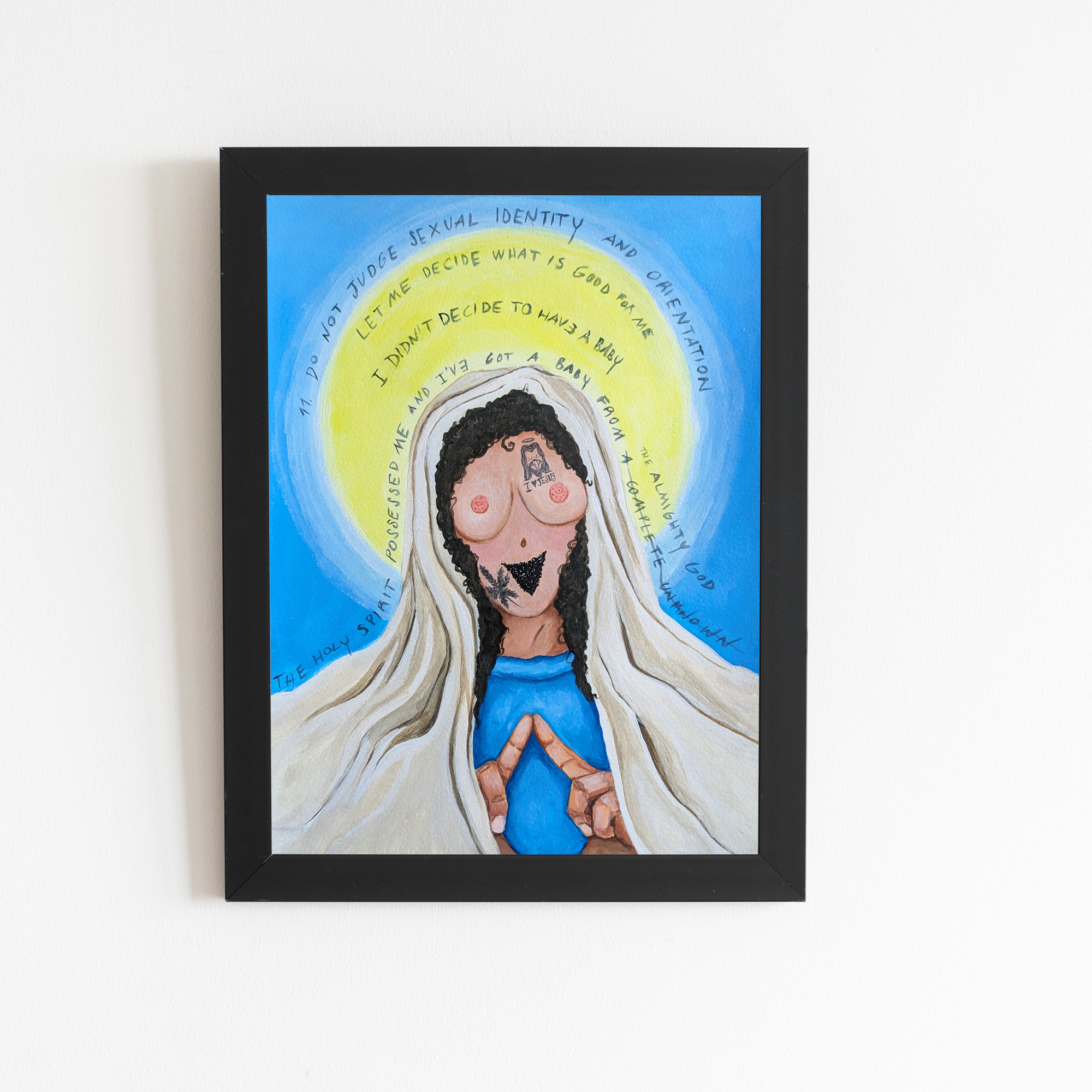
In “The Genitals” series, Marija becomes a radical figure: tattoos, exposed nipples, a wealth of body hair that most people today are ashamed of, and a hand gesture that evokes symbols of empowerment. A Marija who no longer accepts imposition but laments having been impregnated by an “almighty God,” upending the dogma of the Immaculate Conception in a scathing critique of women’s lack of self-determination.
Marija is the woman who claims the right to exist outside the classical, induced narrative. Here, she is no longer the Virgin Mary, pure and inaccessible, but a carnal, human figure.
The messages surrounding her, “Do not judge sexual identity and orientation” and “Let me decide what is good for me”, are a clear rejection of imposed morality. The idea that her pregnancy was not her choice but the result of divine possession completely overturns the traditional vision of the Annunciation: the Madonna becomes a victim of a destiny written by others, a destiny she now openly rejects.
Even her yellow halo, which in other works would have a connotation of sanctity, here is meant to exude personal strength, a symbol of her transformation from an object of veneration to an active participant in her own story.